

Definition of Non Fungible Token
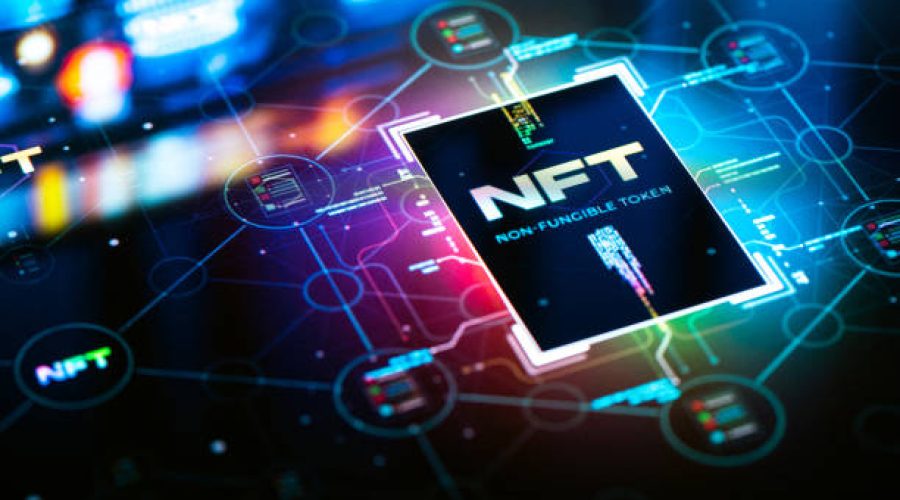
Since the rise of Bitcoin and other cryptocurrencies, a particular form of token has been developed which are deemed non fungible and allow artists and more common users to create, build and share a piece of art by using a token to materialize their content in a blockchain. These particular tokens are designated under the label NFT, a label used for Non Fungible Token.
NFTs were created around the years 2013/2014 and gained in popularity in 2017 when Digital art and NFTs were linked together. Valuations attached to NFTs can be very different considering the theme, creator or design of a given digital artefact attached to a token. At their height, very trendy NFTs were estimated to be worth hundreds Bitcoin (or millions USD)…although the frenzy soon collapsed around a year after. Nevertheless, NFTs remain today a popular support as a digital vehicle to convey and market art in a blockchain and through the Web3 ecosystem entirely.
Ordinal NFTs
Nowadays, most NFTs have been developed in the Ethereum blockchain using the standard token ERC-721. However, another type of NFTs has been recently introduced based on a transaction in the Bitcoin blockchain.
Called Ordinal NFTs or Bitcoin Ordinals in the Bitcoin ecosystem, they are based on the Ordinals theory, and more specifically around Satoshis, on which Bitcoin Ordinals have been elaborated inside the Bitcoin ecosystem. According to the Ordinals theory, Satoshis are recognized as the smallest element of the Bitcoin blockchain and therefore do exist as an underlying support on which to inscribe some digital art content with a full intrinsic value.
According to Casey Rodarmor, who initiated the Ordinals project, the Bitcoin NFTs protocol allows users to inscribe different types of metadata (images, videos, PDFs,..) on Satoshis and mint Bitcoin NFTs directly on the Bitcoin blockchain.
Comparison between Ordinal and Ethereum NFTs
Ordinal NFTs are based on individual Satoshis, which host the art and content and are directly inscribed on-chain. Once an inscription is initially made on a Satoshi, final ordinal NFTs are sent to Ordinal wallets and stored in the Bitcoin blockchain. Thanks to this on-chain feature, Ordinal NFTs benefit from both higher decentralization and security standards based on Bitcoin’s cryptographic features. On the contrary, Ethereum’s ERC-721 standard used to create NFTs host art or creative content off-chain. Traditional NFTs are thus contingent upon the rules and functioning of the token embedded smart contract and directly impacted by any technical change in the Ethereum network.
In addition, as of today, Bitcoin remains the most liquid cryptocurrency in the world. Since Ordinal NFTs are stored on a Bitcoin blockchain, they are definitely more liquid than any traditional NFT that have been developed using other blockchains such as Ethereum, Cardano, Polygon…
Royalties are intertwined with Ethereum NFTs right since the beginning. In contrast, the structure of Bitcoin blockchain prevent owners of Ordinal NFTs to modify a transaction record on which to implement royalties. Meanwhile, the Bitcoin blockchain’s structure does not favor the implementation of complex smart contracts allowing for automated payment flows.
Through the consensus mechanism of the Bitcoin blockchain, a transaction becomes permanent after validation by the network’s nodes, designating the transaction as immutable and recording it permanently in the public ledger. If Ethereum NFTs are also immutable, metadata linked to the NFTs are stored off-chain on a centralized server and thus are prone to updates at the will of the NFT’s owner.
Finally, since Bitcoin has a finite inventory of 21 million tokens and that mining is rendered expensive by a proof-of-work consensus mechanism, the number of Ordinal NFTs is tied to a finite number of coins. This ‘digital’ ceiling provides a kind of premium for the current value of existing as well as future Ordinal NFTs. On the contrary, since a standard ERC-721 contract has no limit in the number of issued tokens, there is theoretically no limit in the number of traditional NFTs that can be created, thus limiting their current or future value.